With population growth and industrial development, wastewater treatment has become one of the most important environmental issues. Conventional wastewater treatment methods, such as activated sludge, while effective, are energy-intensive and sometimes lead to the formation of secondary waste. At the same time, wastewater treatment with modern algae is being proposed as a sustainable and cost-effective solution. This technology not only removes pollutants but also generates valuable biomass for the production of biofuels, fertilizers, and chemicals. In this article, we explore the process, benefits, and challenges of this new approach.
 1. Why are algae suitable for wastewater treatment?
Algae are fast-growing, photosynthetic organisms that are highly adept at absorbing nutrients like nitrogen and phosphorus from wastewater. Here are some of the main reasons for using algae for wastewater treatment:
-
Effective removal of nitrogen and phosphorus: Algae absorb these nutrients and prevent excessive eutrophication (over-enrichment of water bodies).
-
Reduction of chemical oxygen demand (COD) and biological oxygen demand (BOD): Reduces the pollutant concentration in wastewater by decomposing organic matter.
-
Oxygen production: During photosynthesis, the content of dissolved oxygen in the water increases, which promotes the aerobic degradation of pollutants.
-
Absorption of heavy metals: Some algae are capable of absorbing metals such as lead and cadmium.
2. The process of deep purification of wastewater produced by algae
a) The system used
1. Pond with high algal activity (HRAP)
These shallow recirculation tanks provide ideal conditions for algae growth. In these tanks, wastewater is purified by sunlight and algal activity.
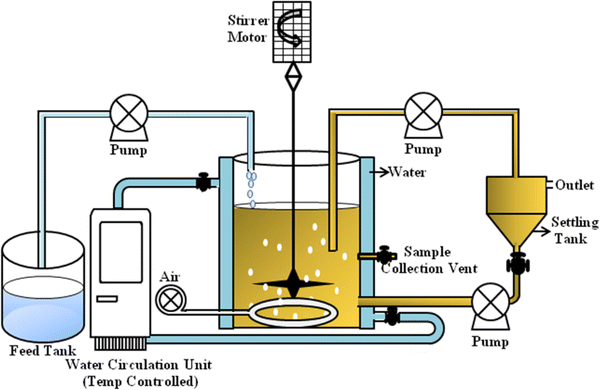
2. Photobioreactor (PBR)
Closed systems allow for more precise control of temperature, lighting, and algae nutrition. They offer higher productivity than open ponds, but require a higher initial investment.
3. Hybrid system (combination of algae and bacteria)
In this process, the symbiosis between algae and bacteria (e.g. algae-bacteria system or ALBA) accelerates wastewater treatment.
b) Main phases of cleaning
1. Pretreatment: Removal of solids and floating matter.
2. Algae feeding: Transferring wastewater into a growth medium for algae.
3. Photosynthesis and pollutant absorption: Algae consume nitrates, phosphates, and organic matter.
4. Biomass separation: Separation of algae from treated water (by centrifugation, filtration, or coagulation ).
5. Reuse of water and biomass: Treated water is used for irrigation or industrial purposes, and the algal biomass is used to produce valuable products.
3. Benefits of using algae for wastewater treatment
a) Environmental benefits
-
Low energy consumption: Compared to conventional methods such as the activated sludge process, less energy is required.
-
Carbon dioxide absorption: Algae absorb carbon dioxide and contribute to reducing greenhouse gas emissions.
-
Reduces the formation of harmful sludge: Unlike chemical methods, no toxic sludge is produced.
b) Economic benefit
-
Produces valuable byproducts: Algal biomass can be processed into biofuels, fertilizers, proteins, and natural pigments.
-
Low operating costs: low need for chemicals and complex equipment.
4. Problems and limitations
a) Technical problems
-
Sunlight requirement: On cloudy or cold days, system performance is lower.
-
Control of invasive species: preventing harmful algal blooms in open ponds.
-
Separating algae from water is a large-scale, expensive, and labor-intensive process.
b) Economic aspects and scalability
-
The acquisition costs of a photobioreactor are high .
-
Further research is needed to improve the algae species.
5. The future of modern wastewater treatment with algae
Recent advances in algal genetic engineering and the development of intelligent systems indicate significant potential for this technology. Future developments include:
-
Use genetically modified algae with a higher ability to absorb pollutants.
-
Integration of algal systems with nanotechnology to improve biomass separation.
-
Development of artificial intelligence models to monitor the performance of algal systems.
Finally
Modern wastewater treatment with algae is an environmentally friendly and sustainable solution for wastewater management. This approach not only ensures the natural removal of pollutants but also creates new economic opportunities through the production of valuable biomass. Despite current challenges, investments in research and development could make this technology the global standard for wastewater treatment.
Keywords: wastewater treatment, advanced algae, photobioreactor, algal pond, algal biomass, nitrogen and phosphorus, ecological sustainability.
This article provides a comprehensive overview of the use of algae for wastewater treatment and can be placed on your website as an educational and informational resource. Add sections such as case studies or expert interviews if desired .