From major cities to state-of-the-art industrial plants, a key element of many modern water treatment systems—a shiny, hard, black material called anthracite—plays a crucial role in providing clean, healthy drinking water. While many methods exist for removing turbidity and suspended solids from water, anthracite filtration has become the gold standard due to its efficiency, cost-effectiveness, and longevity.
This article provides a comprehensive overview of how this exceptional material works, its unique advantages, and the best way to use it in the water purification process.
Why is physical filtration so important?
First, it’s important to understand that removing particulate matter and haze is not just an aesthetic issue. These tiny particles:
-
These are places where bacteria, viruses, and parasites hide and multiply.
-
This prevents disinfectants (such as chlorine) from working effectively.
-
Can cause deposits and corrosion in industrial plants and pipelines.
-
This affects the quality, taste, and smell of the water.
Physical filters, such as anthracite filters, form the first line of defense against these pollutants.
What is anthracite? What properties make it ideal for water purification?
Anthracite is the hardest and most carbon-rich type of coal, formed over millions of years under extreme temperatures and pressures. For water purification, anthracite must be crushed, washed, and sieved to obtain extremely fine particles. Its unique properties include:
-
High hardness (Mohs hardness 3.5 to 4) : This property prevents the erosion or deformation of the anthracite particles during repeated backwashing processes, thus significantly extending the service life of the filter.
-
Low density : Anthracite is lighter than quartz sand (another common filter material). This allows for energy savings during backwashing.
-
Rough and angular surface : Unlike fine, rounded sand grains, anthracite particles have a rough surface covered with micropores. This structure significantly increases the effective contact area, thus facilitating the collection of suspended particles.
-
Chemical neutrality : Anthracite does not react with chemicals present in the water and does not affect the pH value, taste or smell of the water.
-
Corrosion resistance : This material is resistant to acids and alkalis in water and does not decompose.
The amazing anthracite filtration mechanism: How does it work?
Anthracite filters typically serve two purposes:
1. Single-layer filter (anthracite only):
In this system, a layer of anthracite particles forms at a specific depth (usually 50–80 cm) in the filter chamber (washing system). Water flows in from above and penetrates the pores between the anthracite particles. Suspended particles are retained in three different ways:
-
Electrostatic effect: Under the influence of surface forces, some particles adhere to anthracite particles.
-
Surface treatment: Larger particles adhere to the surface of the particles.
-
Deep cleaning: Small particles penetrate the spaces between the molecules and get stuck there.
This “deep filtration capability” is one of the biggest advantages of activated carbon over sand, as it allows the filter to retain more dirt before it needs to be cleaned.
2. Multi-layer filter: This type of filter is the most effective and commonly used in anthracite processing.
It consists of several layers of different materials, each fulfilling its own function. Its structure typically looks like this:
-
Surface layer: coarse-grained anthracite
-
Middle layer: medium-coarse quartz sand
-
Sublayer: fine quartz sand (sometimes with a layer of garnet).
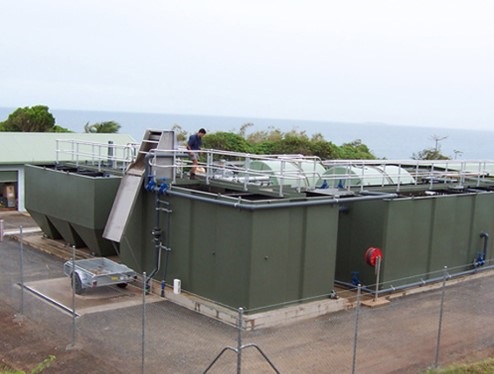
What is the philosophy behind this innovative design?
In conventional single-layer filters, smaller particles sink to the bottom after each backwash due to their uniform density and size, while larger particles rise to the surface. As a result, all suspended solids remain on the filter surface, reducing depth filtration performance.
With multi-layered filter media and the correct selection of filter material (top layer of light, coarse-grained anthracite sand, bottom layer of fine, heavy sand), each layer naturally restores its ideal state after washing. Therefore :
-
The top layer of coarse coal initially traps larger particles and large flakes, thus preventing the lower layers from becoming clogged quickly.
-
Medium sand: Filters out medium-sized particles.
-
Fine sand from the bottom layer: removes the smallest particles that have penetrated the top layer.
This natural “gradient” ensures an even distribution of pollutants across the entire filter depth, resulting in a longer cleaning time and a significant improvement in wastewater quality.
The main advantages of using anthracite compared to other materials
-
Higher filtration rate: Due to the higher porosity , water can penetrate the anthracite layer at a higher speed (10-15 m/h) without affecting the product quality.
-
Increased pollutant absorption capacity: Anthracite filters are able to retain larger particles, thereby reducing the frequency of backwashing and saving water and energy.
-
Reduced operating costs: Savings in backwash water and pump energy can lower the overall costs of a wastewater treatment plant.
-
Extremely long lifespan: The hardness of anthracite ensures that this material retains its effectiveness for many years (even more than 10 years) without needing to be replaced.
Wide application of anthracite filters
-
Urban and rural drinking water treatment plants
-
Pretreatment for reverse osmosis (RO) and ultrafiltration (UF) systems.
-
Treatment and reuse of industrial and municipal wastewater
-
Pool water cleaning
-
Food, pharmaceutical, electronics and energy industries
Diploma
Anthracite is more than just a mineral; it is a carefully engineered, effective, and cost-efficient solution that addresses one of humanity’s most fundamental needs: access to clean drinking water. Anthracite can be used to manufacture durable, highly efficient multi-layer filters, making it a preferred material worldwide. Investments in anthracite-based filtration systems are investments in improved water quality, lower long-term costs, and healthy social and industrial development.