Due to population growth, urban expansion, industrial development, and increasing water consumption, wastewater treatment has become a serious social problem. Domestic wastewater, especially from households, offices, restaurants, hotels, and hospitals, contains organic compounds, pathogens, and pollutants. Direct discharge of wastewater into the environment can cause irreparable damage to water resources, soil, and human health.
One of the best and fastest solutions for treating this type of wastewater is the use of prefabricated metal treatment plants . These plants are designed, manufactured, and installed entirely in a factory, providing homeowners with a complete wastewater treatment system in a very short time, without the need for extensive construction.
Below we provide a complete description of these packages, their components, benefits and use cases.
What are mineral wastewater treatment plants?
Metallic wastewater treatment plants are prefabricated, integrated systems that utilize physical, chemical, and biological methods to remove or reduce contaminants from wastewater. These plants are primarily constructed of durable steel sheets and are ready for use after sandblasting, epoxy coating, or anti-corrosion coating.
These stations are typically designed and manufactured with different capacities—from a few cubic meters to several hundred cubic meters per day—and their dimensions and technical specifications are selected based on the amount of wastewater generated at each plant.
The main components of the mineral wastewater treatment plant
Each prefabricated domestic sewage treatment plant consists of several components that together ensure the complete treatment process. The most important of these are:
-
The main sand and dirt collector
removes large solid particles such as paper towels, plastic, food scraps, and sand. -
The equalization tank is responsible for balancing the flow and quality of the incoming wastewater .
-
The bioreactor (aeration tank) is
the heart of the system, where aeration and aerobic bacterial activity decompose organic matter. -
Secondary clarifiers are used
to settle sludge and separate purified water from suspended solids. -
Disinfection department:
In this department, chlorine, ozone, or ultraviolet radiation are used to destroy pathogens. -
Wastewater retention basins:
Treated wastewater can be used to irrigate green spaces or discharged into water bodies. -
Sludge pond and sludge disposal system:
The resulting sludge is stored and then disposed of or stabilized using suitable methods.
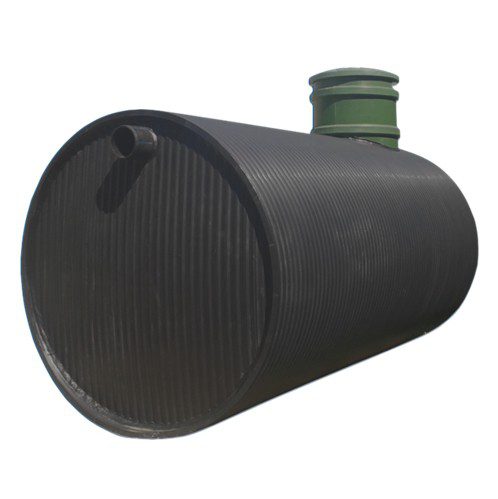
The process of cleaning metal containers
The general process of wastewater treatment in these plants is carried out in the following order:
-
Untreated wastewater flows to a waste collection facility where large wastes are removed.
-
They are temporarily stored in storage tanks to avoid shock from contaminated goods.
-
Water enters the aerator and is broken down into organic substances by microorganisms.
-
Suspended matter and clumps settle in the filter .
-
Part of the settled sludge is transferred to a sludge pond, the other part is returned to maintain the bacterial population.
-
Finally, the purified water is disinfected and drained away.
Advantages of prefabricated mineral wastewater treatment plants
These systems are used in various projects due to their unique properties. Their key advantages include:
-
Quick and easy installation: All components are manufactured as a unit at the factory and only need to be installed on site.
-
Compactness : compact design, can be buried underground.
-
Portability : Packages can be easily moved when the project location changes.
-
High mechanical resistance : use of thick steel sheets and anti-corrosion coating.
-
The capacity varies : from a few cubic meters to hundreds of cubic meters per day.
-
Low operating costs : Improves energy consumption and maintenance.
-
Effectively removes biochemical contaminants , chemical contaminants and microorganisms .
-
Treated wastewater can be reused for agricultural purposes and landscaping .
Use of metal containers in domestic wastewater treatment
These packages can be used for many projects, including:
-
Residential areas and cities
-
Hospitals and clinics
-
Hotels and accommodation establishments
-
Labor camps and construction sites
-
Restaurants and rest areas
-
Small and medium-sized enterprises
-
Military bases and camps
Comparison of metal and concrete containers
Although concrete cladding is used in many projects, metal cladding also has its advantages:
-
It can be manufactured and installed faster than concrete systems.
-
It is light and cannot be moved easily , and the concrete package is solid and cannot be moved.
-
A more precise classification is possible based on different sizes and load capacities.
-
The appearance is more compact and suitable for limited spaces .
Maintenance and operation
One of the most important aspects of operating metal containers is adhering to maintenance procedures. Required procedures include:
-
Perform regular maintenance on blowers and fans.
-
Monitor the flow rate and quality of incoming and outgoing wastewater daily.
-
Regularly remove sludge from the collection trays.
-
Check and repair the anti-corrosive coating if necessary.
-
Use trained personnel to monitor the system.
Finally
Prefabricated metal wastewater treatment systems for residential use are an efficient, fast, and cost-effective solution for wastewater treatment. Their integrated design simplifies installation and allows for quick adaptation to the needs of different projects. Furthermore, the treated wastewater can be reused for irrigation or other purposes, contributing to water conservation and environmental protection.
So, if you are looking for a reliable and durable combined wastewater treatment plant, prefabricated metal containers are the ideal choice.